
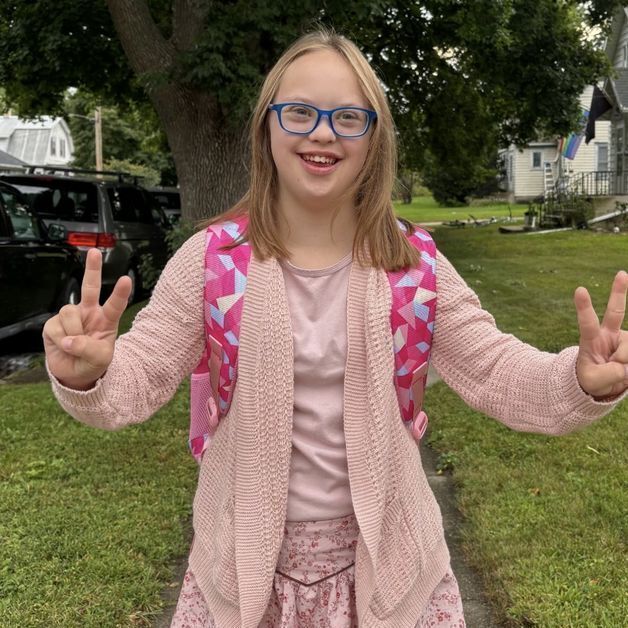
What is Down Syndrome?
Down syndrome is one of the most common genetic variations and occurs in approximately one in every 700 live births in the United States. For most people, each cell in the body has 23 pairs of chromosomes. One chromosome in each pair comes from the mother and the other comes from the father. But sometimes, during cell division, an extra copy of the 21st chromosome is present. As the cells multiply and the pregnancy is carried to term, a baby with Down syndrome is born.
Down Syndrome Facts
-
Most Common Occurring Chromosomal Condition
One in every 691 babies in the US is born with Down syndrome, or around 6,000 births per year. Today, there are approximately 400,000 people with Down syndrome living in the US and that number continues to grow as medical advances continue to support this community.
-
People First
Children with Down syndrome are more like other children than they are different. They learn and grow like everyone else, just at their own pace. Each individual has their own unique personality, talents, and capabilities. One should always use "people-first" language. For example: a newborn is a baby with Down syndrome, not a Down's baby.
-
Equity & Inclusion
Down syndrome occurs in people of all races and socioeconomic levels. People with Down syndrome attend school, work, participate in decisions that affect them, have meaningful relationships, vote, and offer their own unique contributions to society, just like you and me.
-
What causes Down Syndrome?
Scientists have investigated the causes of Down syndrome for the past century. So far, its exact cause has eluded discovery. Doctors aren’t sure why this happens. There’s no link to any environmental factors or anything the parents did or didn’t do. Although many factors have been considered possible causes, the mother’s age is the most often discussed factor related to the likelihood of having a baby with Down syndrome, because older eggs have a greater risk of improper chromosome division. It has been known for some time that the risk of having a child with Down syndrome increases with the mother’s advancing age. For instance, the risk of a 20-year-old mother giving birth to a child with Down syndrome is about 1 in 1600. The risk at age 35 is 1 in 365, and the risk at age 40 increases to 1 in 100. However, the majority of babies with Down syndrome are born to mothers less than 35 years old. This is because there are many more births among younger women.
-
How will having Down Syndrome affect my baby?
Babies born with Down syndrome will grow and develop like all the other babies, but those with Down syndrome generally develop at a somewhat slower pace. Children with Down syndrome may be delayed in achieving milestones such as walking, talking, and eating compared to typically developing children. Children who have Down syndrome may also face intellectual and behavioral delays. Having a loving home environment and early intervention and special education services will positively influence a child’s development in all areas.
-
Can Down Syndrome be treated or cured?
Down syndrome is a lifelong condition. Although it cannot be cured, medical professionals know more about it now than ever. Getting the best care early on can make a big difference for individuals with Down syndrome and improves the likelihood of a full and meaningful life.
3 Types of Down Syndrome
While all individuals with Down syndrome have a third copy of their 21st chromosome, there can be some slight variations in how or where the extra copy is present.
-
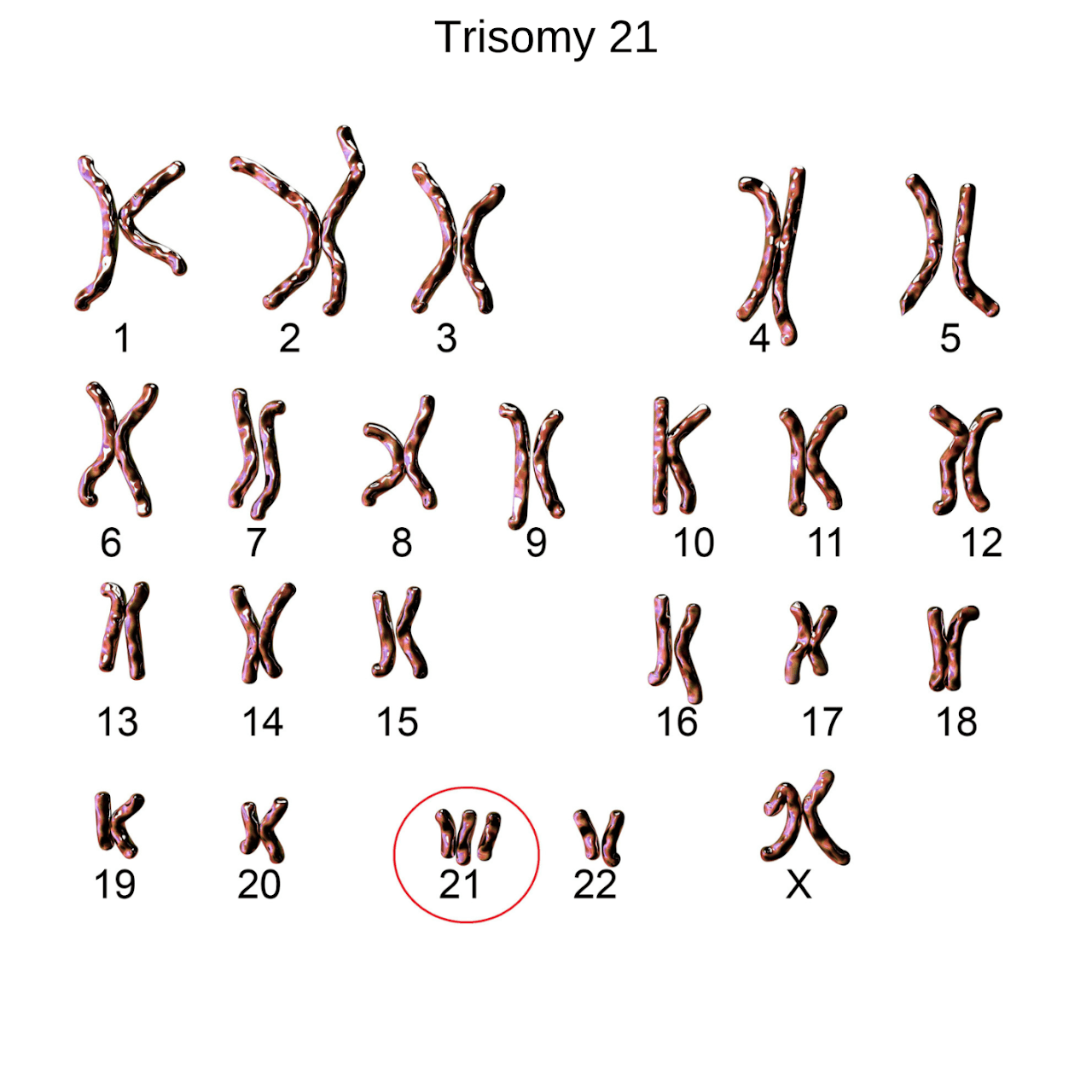
About 95% of people with Down syndrome have Trisomy 21. In this type of Down syndrome, each cell in the body has three separate copies of chromosome 21 instead of the usual two copies.
Trisomy 21
About 95% of people with Down syndrome have Trisomy 21. In this type of Down syndrome, each cell in the body has three separate copies of chromosome 21 instead of the usual two copies.
-
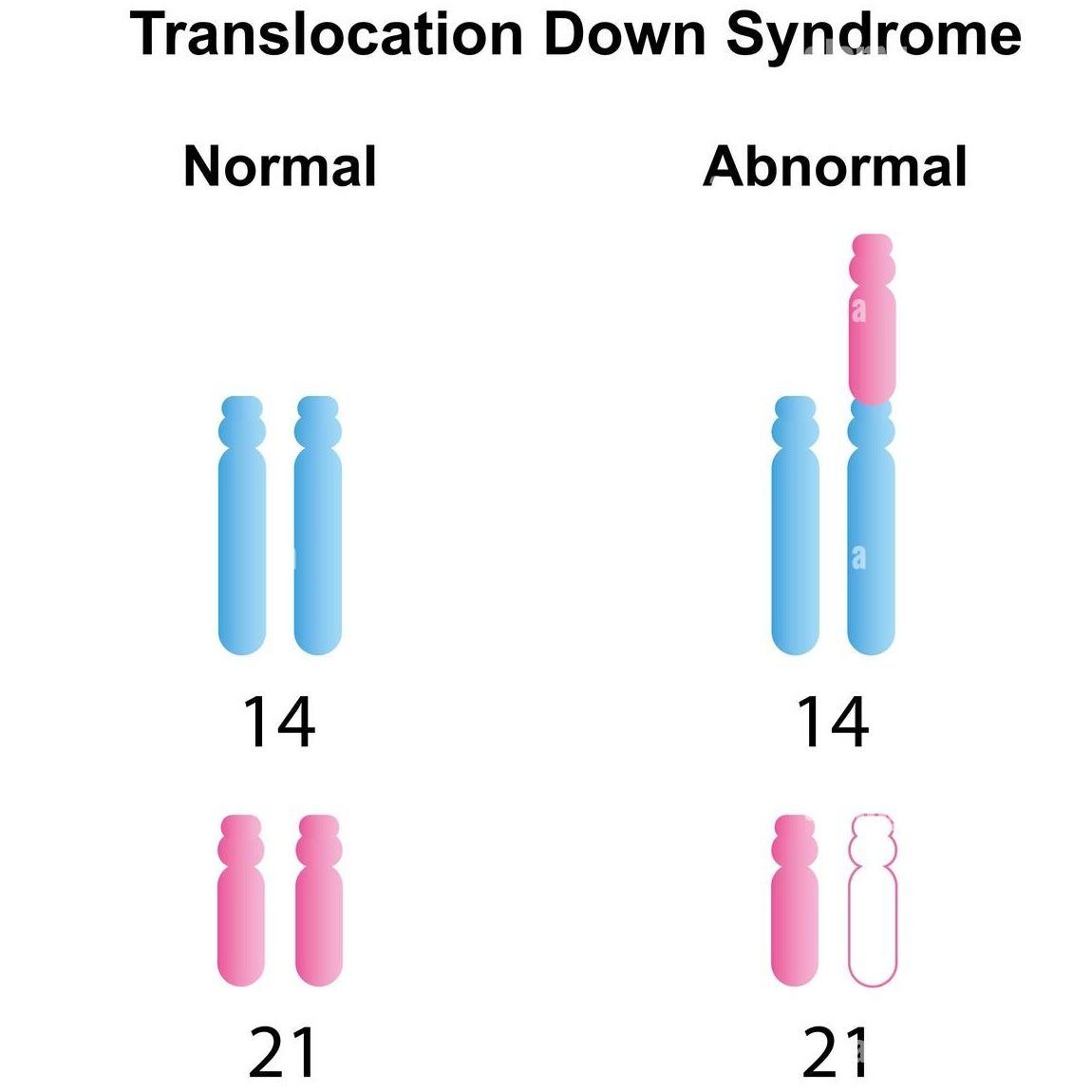
This type accounts for about 3% of people with Down syndrome. It occurs when an extra part or a whole extra chromosome 21 is present, but it is attached or “trans-located” to a different chromosome rather than being a separate chromosome 21.
Translocation
This type accounts for about 3% of people with Down syndrome. It occurs when an extra part or a whole extra chromosome 21 is present, but it is attached or “trans-located” to a different chromosome rather than being a separate chromosome 21.
-
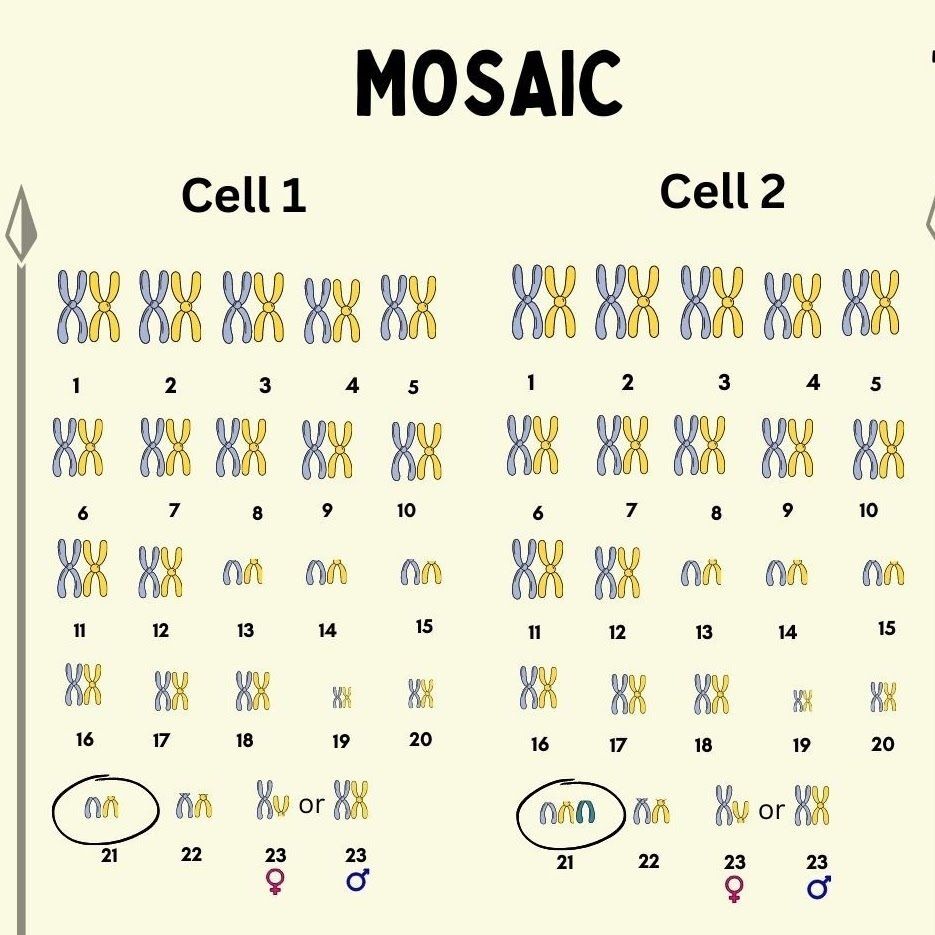
This type affects about 2% of the people with Down syndrome. Mosaic means mixture or combination. For children with mosaic Down syndrome, some of their cells have three copies of chromosome 21, but other cells have the typical two copies of chromosome 21. Children with Mosaic Down syndrome may have the same features as other children with Down syndrome. However, they may have fewer characteristics of the condition due to the presence of some (or many) cells with a typical number of chromosomes.
Mosaic
This type affects about 2% of the people with Down syndrome. Mosaic means mixture or combination. For children with mosaic Down syndrome, some of their cells have three copies of chromosome 21, but other cells have the typical two copies of chromosome 21. Children with Mosaic Down syndrome may have the same features as other children with Down syndrome. However, they may have fewer characteristics of the condition due to the presence of some (or many) cells with a typical number of chromosomes.
Characteristics at Birth
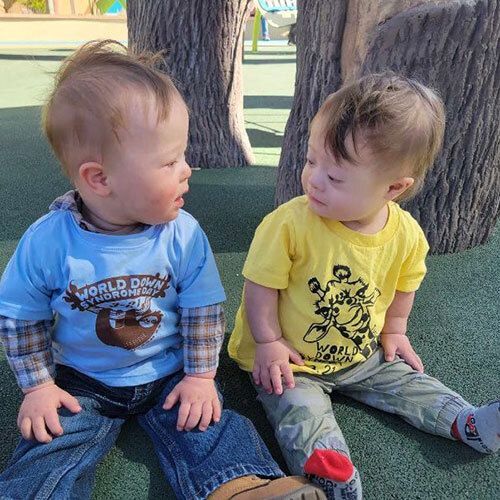
Every person with Down syndrome is a unique individual and may posses these characteristics in varying degrees or not at all. People with Down syndrome might look similar and share some common features, but above all, they will look like their family members and will have their own unique personality.
Reduced muscle tone (hypotonia)
Flat facial profile, flat nasal bridge, small nose
Eyes that slant upwards and outwards, fold between lids at the inner corner of the eye
Small mouth, which can make the tongue seem slightly large
Low set of unusually formed ears
Big space between first and second toe
Broad hands with short fingers, little finger may curve inward
Palm may have one line across it
Below average birth weight and length
Words Matter
your words have power, choose wisely
Down vs. Down's - Down syndrome is the preferred spelling, an apostrophe indicates ownership or possession
People first - a child with Down syndrome is preferred vs. a Down syndrome child
Avoid "Down's Child", "Down's" as in "he has Down's", or "Downy" as in "he's a little Downy kid" etc.
Down syndrome is a condition, not a disease
People "have" Down syndrome, they do not "suffer from" nor are they "afflicted by" the condition
"Typically developing" or "typical" is preferred over "normal"
"Intellectual disability" or "cognitive disability" or "delayed learning" has replaced "mental retardation" as the appropriate terminology
The R word - "retarded" - using this word is hurtful and suggests that people with disabilities are not competent


